Cripta del Crocefisso (Ugento) (en)
Route:
Naturalistico/archeologico

2015-06-22 19:08:50
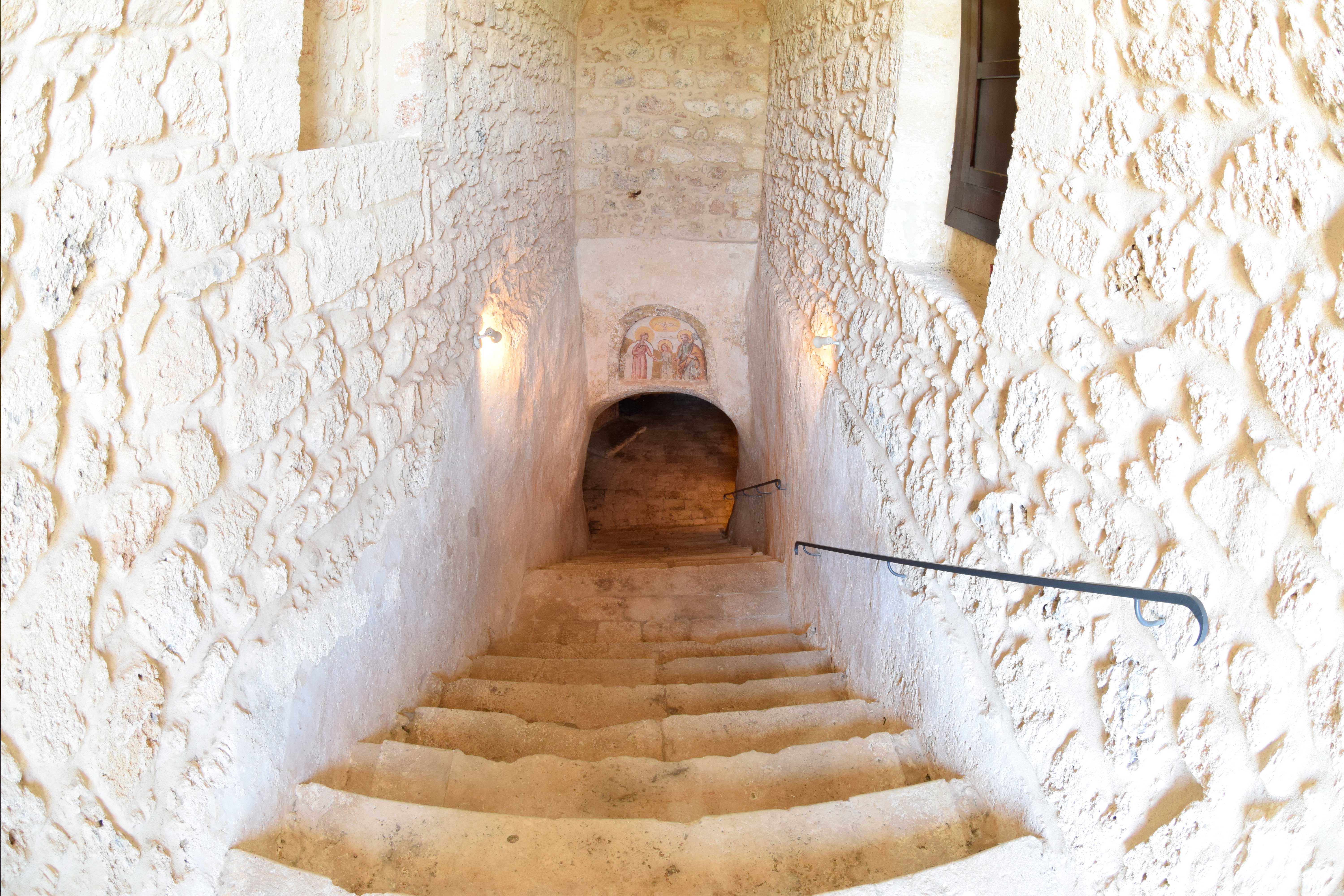
The crypt, entirely carved into the tuff rocks, is the result of modifications and additions in the place and in the architecture, as demonstrated by the two circular columns with Doric capital of the sixteenth century, the addition of an altar on the east wall, topped by a seventeenth-century fresco depicting the Crucifixion (hence the name of the crypt), a skylight created later and the occlusion of the original entrance on the west. It is accessible through the northern door, which is followed by a barrel-vaulted staircase that leads to the underground room. The entrance is decorated with a frescoed lunette with the Holy Family scene. Inside, the walls and ceiling are covered with frescoes dating between the thirteenth and the seventeenth century, accompanied by inscriptions in Greek and in Latin. The oldest painting cycle (XIII century) includes the 'Annunciation, the Christ Pantocrator, the Virgin of Tenderness, the enthroned Mary and St. Nicholas from the early fourteenth century. Painted on the ceiling are Crusaders’ shields alternating with shields with black cross, symbol of the Teutonic Knights, and shields with the red cross, the symbol of the Templar Knights. Also painted on the ceilings are stars, plant motifs and real and imaginary animals, such as the large Hydra, a figure from Greek mythology.
Strada Provinciale Ugento-Casarano, Ugento
current use:
The Museum System of Ugento, run by a cooperative of services that creates cultural and artistic events in the territory, was formed in 2011 following an agreement between the Comune di Ugento e lo Studio di Consulenza Archeologica. The museum complex is designed to promote an integrated system of management of the cultural heritage in the Ugentino territory, including: New Archaeological Museum, Colossus Collection, Castle of the Princes of d'Amore, Rovito Palace and the Monumental Complex of the Cripta del Crocifisso and the Church of Madonna di Costantinopoli.
bibliography sources:
Cripta del Crocefisso (Ugento)
L. Antonazzo, Guida di Ugento. Storia e arte di una città millenaria, Galatina 2005
C.D. Fonseca et alii., Gli insediamenti rupestri medievali nel Basso Salento, Galatina 1979, p. 217
historical information:
For centuries, the crypt was used as a place of worship of the small stony village that surrounds it. The area in which it developed is of great archaeological interest and records human presence at least from the fourth century B.C. It is located on the supposed Via Sallentina, a route of the Messapian and Roman ages that connected Otranto to Taranto, crossing Castrum Minervae Veretum, Uzentum, Baletium, Neretum and Manduris, whose path can be seen from the ancient Tabula Peutingeriana. The crypt is strongly influenced by patterns of eastern monasticism. It is a part of the many religious structures of the same kind that emerged in Salento between the thirteenth and fourteenth century, but differs from the others in some characteristics: the most interesting and fascinating is the decoration of the ceiling consists of shields crusaders red and blacks, fantasy figures such as the gryphon and the hydra, probably to ward off evil, and other symbols related to the religious sphere. In 2004 and 2005, the Crypt was involved in excavation work aimed at burials around the perimeter of the hypogeum in the bedrock: on the west of the actual entrance, eight graves were found at a depth of over three meters. These tombs are located on the ancient pavement, then obliterated, along with the ancient entrance, due to the floods that have led to the opening, during the seventeenth century, of the current entrance

 Clear routes
 Civil Architecture
 Military Architecture
 Religious Architecture
 Rural Architecture
 Archeology
 Industrial Archaeology
 Landscape and Nature
 Natural Parks
 Site multilayered


